
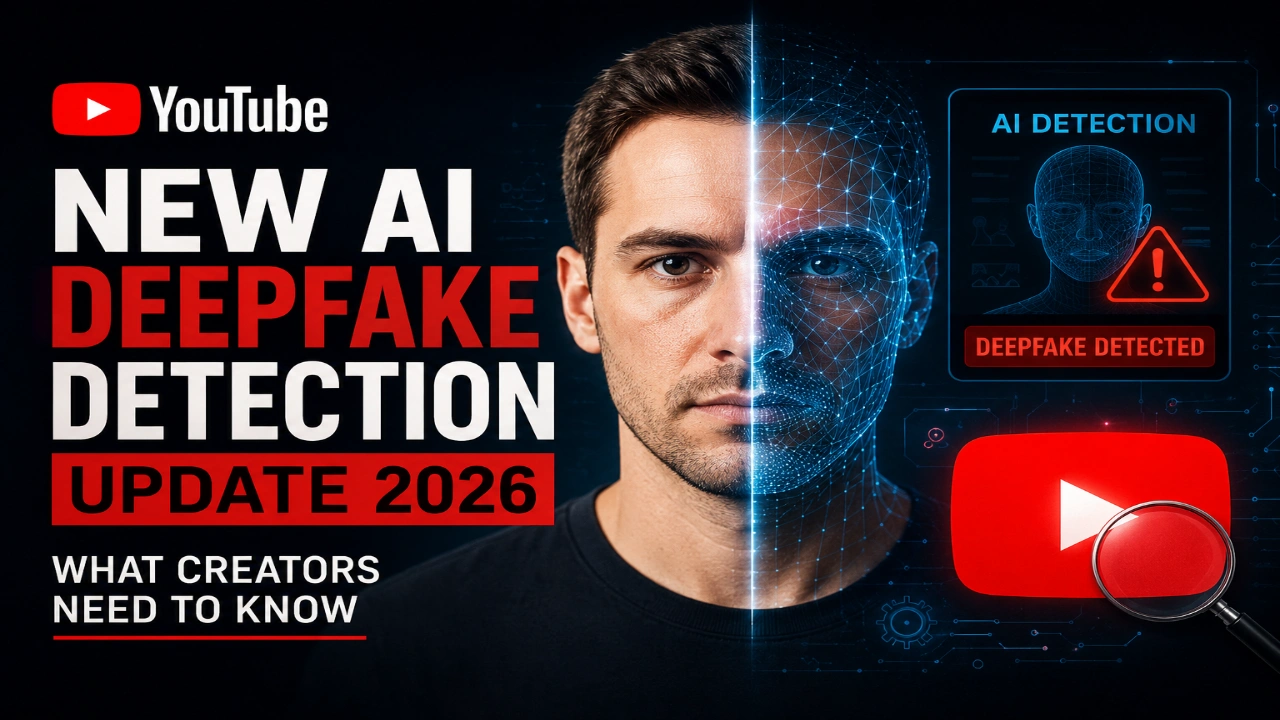
YouTube AI Deepfake Detection Update 2026: What Creators Should Know
📌 In This Article
- What Is YouTube’s New AI Deepfake Detection Update?
- Why YouTube Is Suddenly Focusing So Much on AI
- Does This Mean AI Content Is No Longer Allowed?
- Faceless Channels Could Feel More Pressure
- Why Creators Should Care About This Update
- Can YouTube Actually Detect AI Videos Properly?
- The Bigger Problem Behind Deepfakes
- What Type of AI Content Could Become Risky?
- Could This Affect Monetization in the Future?
- AI Isn’t Going Away Anytime Soon
- Final Thoughts
If you’ve been following YouTube updates recently, you’ve probably noticed one thing: the platform is taking AI content much more seriously now.
Over the last year, AI tools have completely changed how people create videos online. Some creators are using AI for editing, thumbnails, subtitles, scripts, and productivity. Others are creating realistic fake voices, AI-generated interviews, and manipulated videos that are becoming harder to recognize every month.
That’s exactly why YouTube has now expanded its AI deepfake detection and likeness protection systems.
And honestly, this update is bigger than many creators think.
A lot of people first assumed this was only about celebrities or political videos, but the changes could eventually affect regular creators, faceless channels, commentary channels, AI tool users, and even small YouTubers experimenting with synthetic media.
The internet is changing fast, and platforms are clearly trying to catch up before things become completely chaotic.
What Is YouTube’s New AI Deepfake Detection Update?
In simple words, YouTube is increasing protection against AI-generated content that imitates real people without permission.
This includes things like:
- cloned voices
- fake interviews
- manipulated videos
- realistic AI-generated faces
- synthetic media pretending to be authentic
The company now allows more people to request removal of videos that use their likeness or voice through AI-generated content.
A few years ago, this kind of technology felt futuristic. Now random users online can create realistic fake videos within minutes using publicly available tools.
That’s the part making platforms nervous.
Because once fake content becomes too believable, viewers stop trusting what they’re watching.
Why YouTube Is Suddenly Focusing So Much on AI
Honestly, the platform probably had no choice.
AI video generation has improved incredibly fast. Even people with almost no editing experience can now create realistic synthetic content using online AI tools.
Some creators use these tools responsibly for:
- storytelling
- editing
- animation
- educational videos
- language dubbing
But there’s another side too.
Over the last few months, fake celebrity clips, AI-generated scams, manipulated interviews, and cloned voices started spreading across social media more frequently.
And once those videos start going viral, fixing misinformation becomes difficult.
That’s where platforms like YouTube start stepping in.
The company clearly wants to avoid becoming a platform filled with misleading deepfake content before the problem grows even larger.
Does This Mean AI Content Is No Longer Allowed?
No, and this is where many creators are getting confused.
YouTube is not banning AI-generated content completely.
That would honestly be impossible now because AI tools are already part of normal content creation workflows.
Thousands of creators currently use AI for:
- subtitles
- thumbnail generation
- script organization
- voice cleanup
- translations
- editing assistance
Even major creators and companies are using AI tools daily now.
The bigger issue is deception.
If content is designed to intentionally mislead viewers into believing fake content is real, that’s where problems can start appearing.
Faceless Channels Could Feel More Pressure
Faceless YouTube channels have exploded recently.
You’ve probably seen them yourself:
- AI voiceovers
- stock footage
- AI-written scripts
- synthetic visuals
- automation channels
Some of these channels are completely harmless.
But others are starting to blur the line between automation and impersonation.
For example, using a cloned celebrity voice to make fake statements may attract much more moderation attention now compared to before.
And honestly, YouTube has likely been preparing for this for a while.
The platform knows AI-generated content will only become more realistic from here.
Why Creators Should Care About This Update
A lot of smaller creators think policy updates only affect massive channels.
That’s usually not true.
Whenever YouTube changes moderation systems, the effects slowly spread across the platform over time.
Creators using AI heavily should probably start paying more attention to:
- originality
- transparency
- authenticity
- editing style
Trying to create fake viral clips using AI might work temporarily, but long term it could become risky if platforms continue tightening synthetic media rules.
And realistically, advertiser pressure also plays a huge role here.
Big brands don’t want ads appearing next to misleading AI-generated videos.
Can YouTube Actually Detect AI Videos Properly?
This is probably the biggest question creators are asking right now.
The honest answer is: not perfectly.
AI-generated content is becoming harder to detect every month. Some deepfake videos already look convincing enough to fool ordinary viewers.
YouTube reportedly uses:
- automated moderation
- reporting systems
- metadata analysis
- AI detection tools
But even large tech companies still struggle to identify all synthetic media accurately.
That’s why user reports will probably remain important for a long time.
In many cases, viewers themselves may notice manipulated content before automated systems do.
The Bigger Problem Behind Deepfakes
The scary part about AI-generated media is not just entertainment.
It’s trust.
Imagine someone creating a fake video using your voice or face and uploading it online. Even if the content is fake, some viewers may still believe it’s real.
That creates serious problems for:
- creators
- celebrities
- politicians
- businesses
- ordinary users
And as AI tools become cheaper and easier to use, these situations may become much more common across the internet.
That’s probably why platforms are reacting more aggressively now instead of waiting another few years.
What Type of AI Content Could Become Risky?
From what YouTube is signaling, content that heavily imitates real people deceptively may face the most scrutiny.
That could include:
- fake interviews
- cloned voices
- manipulated speeches
- fake celebrity promotions
- realistic impersonation videos
Meanwhile, content that clearly uses AI creatively or educationally will probably remain safer.
There’s a huge difference between:
- using AI for editing assistance
and
- trying to fool viewers intentionally.
That distinction matters a lot now.
Could This Affect Monetization in the Future?
Potentially yes.
YouTube already reviews channels for:
- spam
- reused content
- originality
- misleading practices
As AI moderation improves, creators heavily relying on deceptive synthetic media may eventually face monetization problems.
At the same time, creators using AI responsibly may actually gain advantages because AI tools can save huge amounts of time during production.
The creators most likely to survive these changes are probably the ones balancing automation with genuine creativity.
AI Isn’t Going Away Anytime Soon
One thing is obvious at this point: AI content is not disappearing.
In fact, it’s becoming more normal every month.
The internet is moving toward a future where AI tools are part of everyday content creation. Platforms know this. Creators know this. Viewers are starting to realize it too.
The real challenge now is figuring out where the line should exist between creative AI usage and harmful manipulation.
And honestly, that debate is probably just getting started.
Final Thoughts
YouTube’s new AI deepfake detection update shows that platforms are becoming much more serious about synthetic media and online identity protection.
The company is clearly trying to stop harmful impersonation before fake AI-generated content becomes completely uncontrollable.
For creators, this doesn’t mean AI tools are suddenly dangerous. It simply means the way those tools are used matters more now.
Creators who focus on:
- originality
- transparency
- authentic storytelling
- responsible AI usage
will probably continue growing without major issues.
Meanwhile, channels depending heavily on misleading deepfake content may eventually face moderation or monetization risks later on.
The internet is entering a completely new phase, and honestly, most platforms are still trying to figure things out in real time.
Also Read:- Fully Funded Scholerships
YouTube’s New AI Update 2026 Changes Shorts, Monetization & AI Content Rules
May 12, 2026
YouTube Automation 2026: Complete Guide to Start a Faceless Channel & Earn $500/Month
April 19, 2026
Best AI Tools for YouTube Automation in 2026: 7 Tools to Run Faceless Channels
April 20, 2026
💬 Comments
No approved comments yet. Be the first to share your thoughts!
Leave a Comment
Your email address will not be published. Required fields are marked *