
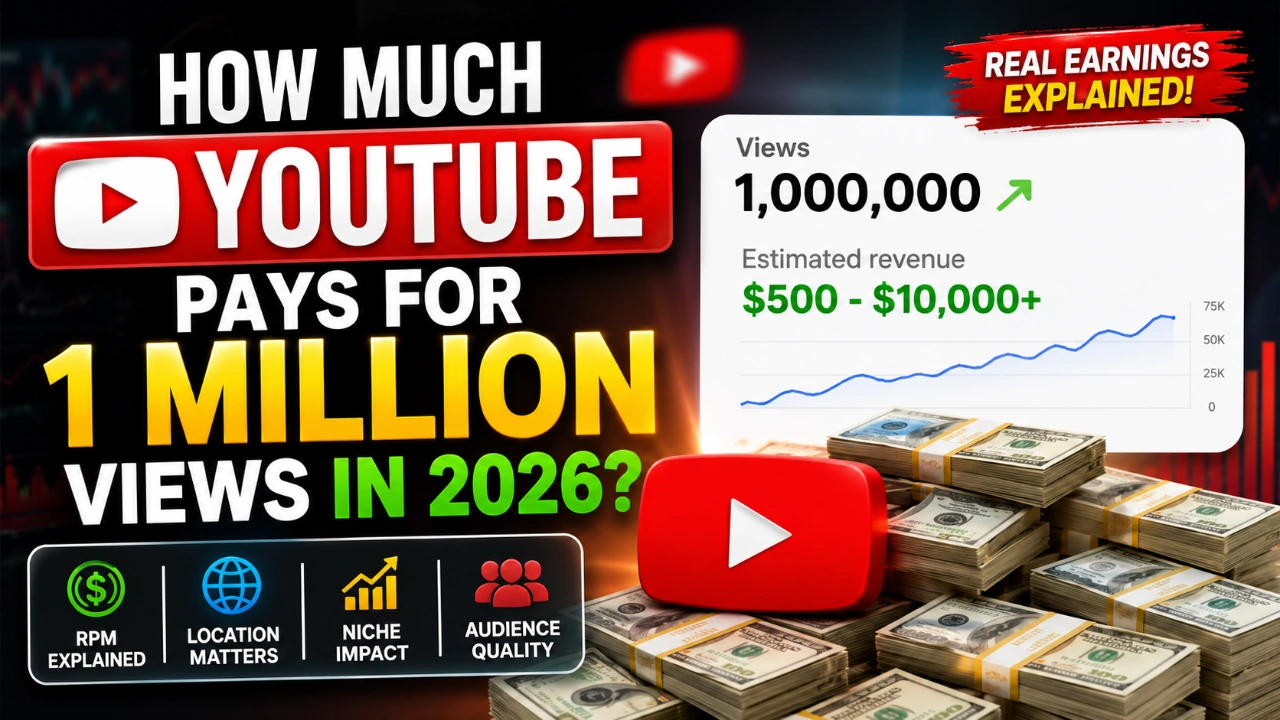
How Much YouTube Pays for 1 Million Views in 2026? Real Earnings Explained
📌 In This Article
- How Does YouTube Monetization Work?
- How Much YouTube Pays for 1 Million Views
- Estimated YouTube Earnings Per 1 Million Views
- Why Some YouTubers Earn More Than Others
- Audience Location
- Content Niche
- Finance
- Technology
- Business
- Digital Marketing
- Understanding CPM and RPM
- What Is CPM?
- What Is RPM?
- Real-World Example: Why One Million Views Doesn't Mean Equal Income
- Does Video Length Affect Earnings?
- How Much Do YouTube Shorts Pay for 1 Million Views?
- Highest Paying YouTube Niches in 2026
- 1\. Personal Finance
- 2\. Software Reviews
- 3\. Artificial Intelligence
- 4\. Digital Marketing
- 5\. Online Business
- Other Ways YouTubers Make Money
- Affiliate Marketing
- Sponsorships
- Digital Products
- Consulting and Services
- How to Increase Your YouTube Earnings
- Create Evergreen Content
- Improve Audience Retention
- Target High-Value Keywords
- Build Audience Trust
- Common Myths About YouTube Earnings
- Myth #1: One Million Views Always Means Thousands of Dollars
- Myth #2: More Subscribers Mean More Income
- Myth #3: Shorts Pay the Same as Long Videos
- Myth #4: Viral Videos Guarantee Huge Profits
- Frequently Asked Questions
- How much does YouTube pay for 1 million views?
- How much does YouTube Shorts pay for 1 million views?
- Which YouTube niche pays the highest RPM?
- Can a small YouTube channel make money?
- Does YouTube pay for views or ads?
- Key Takeaways
- Final Thoughts
Have you ever watched a YouTuber hit **one million views** and wondered how much money they actually earned?
It's one of the most searched questions among aspiring creators, freelancers, students, and anyone looking to make money online. Every day, thousands of people search for terms like "how much YouTube pays for 1 million views", "YouTube earnings per million views", and "how much money does YouTube pay creators?"
The problem is that there isn't a single answer.
Some creators earn less than $500 from one million views, while others make over $10,000 from the same number of views. This huge difference often confuses beginners and leads to unrealistic expectations.
The truth is that YouTube doesn't pay creators based on views alone. Instead, earnings depend on multiple factors including audience location, content niche, watch time, advertiser demand, engagement, and RPM.
In this detailed guide, you'll learn how YouTube monetization works in 2026, how much creators realistically earn from one million views, why some channels earn more than others, and what you can do to increase your own YouTube income.
How Does YouTube Monetization Work?
Before discussing actual earnings, it's important to understand how YouTube pays creators.
Many beginners think YouTube simply pays a fixed amount for every view. That's not how the platform works.
YouTube primarily generates revenue through advertising. Companies pay Google to display advertisements before, during, or after videos. YouTube then shares a percentage of that advertising revenue with creators who are part of the YouTube Partner Program.
This means creators are not paid directly for views.
Instead, they are paid based on the advertising value generated by those views.
That's why two creators with exactly the same number of views can earn completely different amounts.
How Much YouTube Pays for 1 Million Views
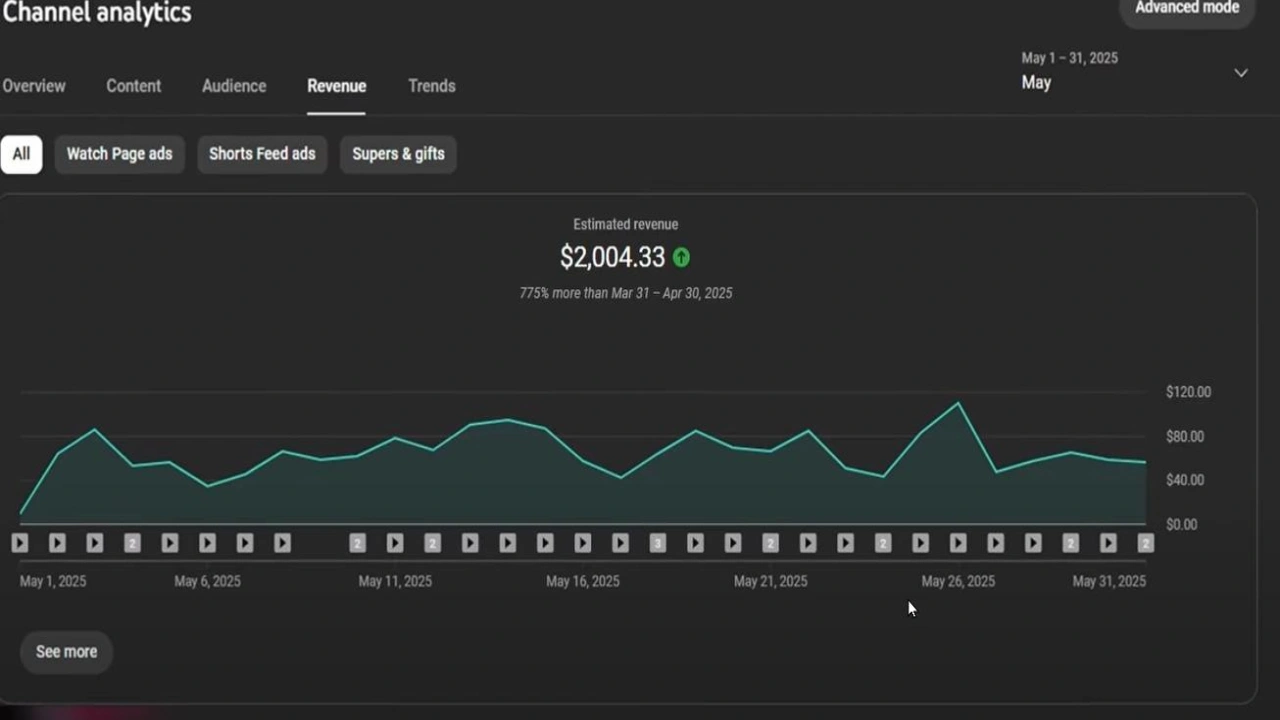
In most cases, creators earn somewhere between $500 and $10,000+ for one million views.
However, this number can be significantly higher or lower depending on several factors.
Estimated YouTube Earnings Per 1 Million Views
| Content Category | Estimated Earnings |
|---|---|
| Entertainment | $500 – $2,500 |
| Gaming | $1,000 – $4,000 |
| Technology | $2,000 – $8,000 |
| Business | $3,000 – $10,000 |
| Finance | $5,000 – $15,000+ |
| YouTube Shorts | $20 – $300 |
These figures are estimates rather than guarantees, but they provide a realistic picture of what creators can expect.
A creator making finance content often earns more than an entertainment creator because advertisers in banking, investing, insurance, and software industries usually pay higher rates.
Why Some YouTubers Earn More Than Others
One of the biggest misconceptions about YouTube is that every view has the same value.
In reality, some views are worth much more than others.
Several important factors influence earnings.
Audience Location
The location of your audience can dramatically affect your revenue.
Viewers from countries such as:
- United States
- Canada
- United Kingdom
- Australia
- Germany
typically generate higher advertising revenue because advertisers in those markets spend more money.
For example, a creator receiving one million views from the United States may earn several times more than a creator receiving one million views from countries with lower advertising budgets.
This is one reason why many creators pay close attention to their audience demographics.
Content Niche
Not all YouTube categories are equally profitable.
Some niches naturally attract higher-paying advertisers.
Finance
Finance is often considered one of the highest-paying niches on YouTube. Topics such as investing, credit cards, budgeting, and personal finance frequently attract premium advertisers.
Technology
Technology channels reviewing software, gadgets, AI tools, and business applications often earn strong RPM rates.
Business
Entrepreneurship and online business content also performs well because advertisers target business owners and professionals.
Digital Marketing
Marketing content often attracts valuable audiences, making it attractive to advertisers.
On the other hand, entertainment, memes, celebrity gossip, and viral clips usually generate lower advertising rates despite receiving large numbers of views.
Understanding CPM and RPM
If you're serious about YouTube monetization, you need to understand two important terms.
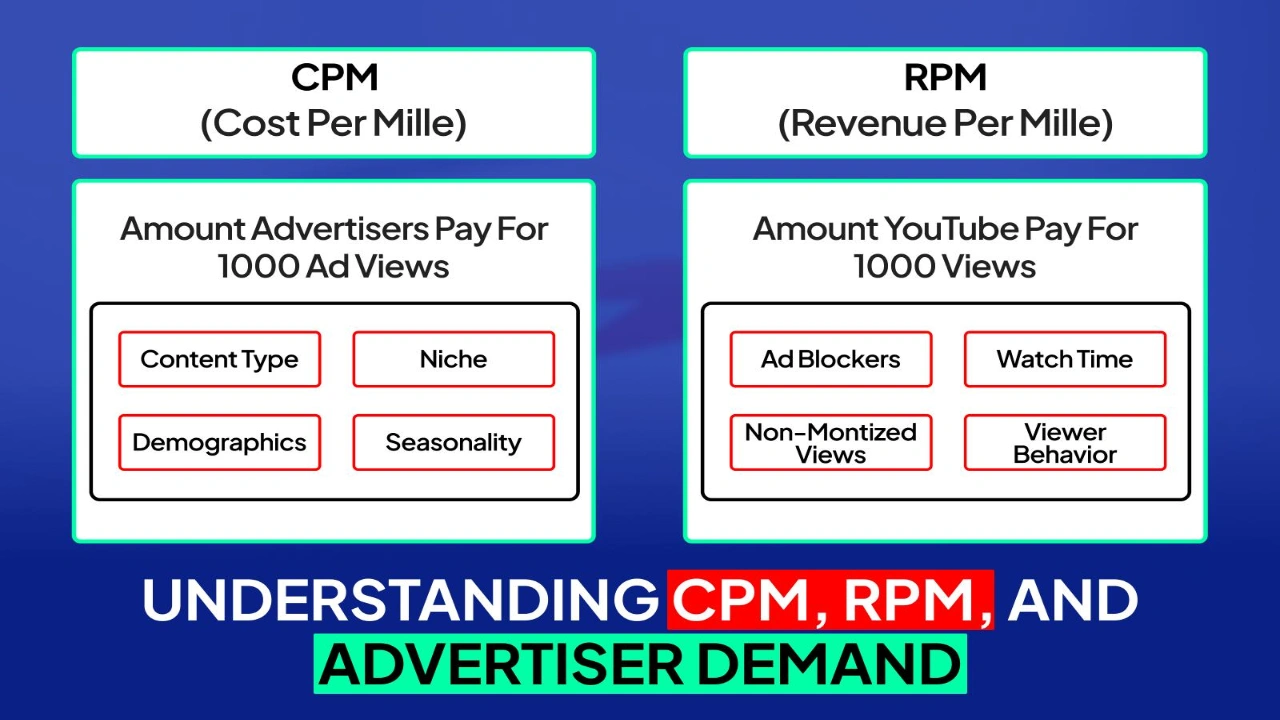
What Is CPM?
CPM stands for Cost Per Mille. This refers to the amount advertisers pay for every 1,000 ad impressions.
For example, if advertisers pay a CPM of $10, they are spending $10 for every 1,000 ad views. However, creators do not receive the full CPM amount.
What Is RPM?
RPM stands for Revenue Per Mille. This represents the amount creators actually earn after YouTube takes its share.
RPM is the most important metric when estimating earnings.
For example:
- RPM of $1 = approximately $1,000 per million views
- RPM of $3 = approximately $3,000 per million views
- RPM of $8 = approximately $8,000 per million views
This explains why some creators earn significantly more than others despite having similar view counts.
Real-World Example: Why One Million Views Doesn't Mean Equal Income
Imagine two creators each receive one million views.
The first creator runs a finance channel targeting viewers in the United States.
The second creator runs a general entertainment channel with a global audience.
Although both creators achieved the same number of views, the finance creator may earn several times more because advertisers in finance and software industries often pay much higher advertising rates.
This is why successful creators focus on audience quality rather than chasing views alone.
The value of a view often matters more than the number of views.
Does Video Length Affect Earnings?
Yes, absolutely.
Video length can have a significant impact on revenue. Videos longer than eight minutes can include additional ad placements.
More ad placements often mean higher earnings. However, simply creating longer videos isn't enough.
Creators must also maintain strong audience retention. A fifteen-minute video that people abandon after one minute may perform worse than a shorter video that keeps viewers engaged until the end.
How Much Do YouTube Shorts Pay for 1 Million Views?
YouTube Shorts have become one of the fastest-growing content formats on the platform. Many creators have gained thousands of subscribers from Shorts, and some channels have even built entire audiences using short-form content.
However, Shorts earnings are very different from traditional YouTube videos.
In many cases:
- 1 Million Shorts Views = $20 to $300
- 1 Million Long-Form Views = $500 to $10,000+
This difference surprises many new creators.
The reason is simple. Traditional videos offer more advertising opportunities. Advertisers can display pre-roll ads, mid-roll ads, and various other ad formats. Shorts rely on a different revenue-sharing model, which generally produces lower earnings.
That doesn't mean Shorts are useless.
Many successful creators use Shorts as a traffic source. They attract new viewers through Shorts and then convert those viewers into subscribers who watch longer videos.
This strategy allows creators to benefit from both audience growth and stronger monetization.
Highest Paying YouTube Niches in 2026
If your goal is maximizing YouTube revenue, niche selection matters.
Some industries consistently attract higher-paying advertisers.
1\. Personal Finance
Topics like investing, credit cards, loans, budgeting, and saving money often generate some of the highest CPMs on YouTube. Advertisers in the financial sector are willing to spend significant amounts to acquire customers.
2\. Software Reviews
Software companies regularly advertise online. Channels reviewing business software, productivity tools, AI applications, and SaaS products often benefit from strong advertising rates.
3\. Artificial Intelligence
AI remains one of the fastest-growing industries. Content related to ChatGPT, Claude, AI tools, automation, and productivity software continues attracting both viewers and advertisers.
4\. Digital Marketing
Marketing tutorials, SEO guides, social media growth tips, and advertising strategies often perform well. These audiences are attractive because they include entrepreneurs, business owners, and professionals.
5\. Online Business
Topics such as freelancing, e-commerce, dropshipping, affiliate marketing, and entrepreneurship remain profitable because advertisers see strong commercial intent.
Other Ways YouTubers Make Money
One of the biggest mistakes beginners make is assuming YouTube income comes only from ads.
In reality, many successful creators earn more money outside YouTube ads than from YouTube ads themselves.
Affiliate Marketing
Creators recommend products and earn commissions whenever viewers make purchases through their links. Many technology and software creators earn substantial affiliate income.
Sponsorships
Brands often pay creators directly to feature products or services within videos. Even smaller creators can secure sponsorship deals if they have an engaged audience.
Digital Products
Some creators sell courses, ebooks, templates, guides, and membership programs. This creates an additional source of income beyond advertising revenue.
Consulting and Services
Many professionals use YouTube as a lead-generation platform. For example, SEO consultants, designers, developers, and marketing experts often attract clients directly through YouTube content.

How to Increase Your YouTube Earnings
If you're serious about increasing revenue, focus on these strategies.
Create Evergreen Content
Evergreen content remains useful for months or even years. Examples include tutorials, guides, reviews, and educational content. These videos can continue generating views long after publication.
Improve Audience Retention
YouTube rewards videos that keep viewers engaged. Higher watch time often leads to more recommendations, better rankings, and increased revenue.
Target High-Value Keywords
Focus on topics with strong advertiser demand. For example: AI Tools, Online Business, Software Reviews, Finance, and Technology. These niches often attract better RPM rates.
Build Audience Trust
People are more likely to click recommendations and purchase products from creators they trust. Trust directly affects long-term monetization opportunities.
Common Myths About YouTube Earnings
Myth #1: One Million Views Always Means Thousands of Dollars
False. Some creators earn hundreds of dollars while others earn thousands. Everything depends on RPM and audience quality.
Myth #2: More Subscribers Mean More Income
Not necessarily. A channel with 50,000 highly engaged subscribers may earn more than a channel with 500,000 inactive subscribers.
Myth #3: Shorts Pay the Same as Long Videos
False. Long-form content generally generates significantly more revenue.
Myth #4: Viral Videos Guarantee Huge Profits
Not always. A viral entertainment video may earn less than a smaller finance video because advertiser demand differs.
Frequently Asked Questions
How much does YouTube pay for 1 million views?
Most creators earn between $500 and $10,000+ depending on niche, audience location, RPM, and advertiser demand.
How much does YouTube Shorts pay for 1 million views?
Many creators report earnings ranging from $20 to $300 per million Shorts views.
Which YouTube niche pays the highest RPM?
Finance, software, business, AI, and technology are generally among the highest-paying niches.
Can a small YouTube channel make money?
Yes. Many small creators earn through ads, affiliate marketing, sponsorships, consulting, and digital products.
Does YouTube pay for views or ads?
YouTube primarily pays creators through advertising revenue rather than views alone.
Key Takeaways
- One million views does not guarantee a fixed income.
- RPM is more important than total views.
- Audience location significantly affects earnings.
- Finance and technology niches often generate higher revenue.
- Shorts are excellent for growth but usually earn less than long-form content.
- Successful creators often combine ads, sponsorships, affiliate marketing, and digital products.
Final Thoughts
So, how much does YouTube pay for 1 million views in 2026?
The answer depends on several factors including niche, audience location, RPM, watch time, engagement, and advertiser demand.
While some creators may earn only a few hundred dollars, others can generate several thousand dollars from the same number of views.
Instead of focusing only on views, successful creators focus on creating valuable content, attracting the right audience, improving retention, and building multiple income streams.
One million views is an exciting milestone, but long-term success on YouTube comes from consistency, trust, and content that genuinely helps viewers.
Also Read:- Tiktok creator Monitaization

YouTube Automation 2026: Complete Guide to Start a Faceless Channel & Earn $500/Month
April 19, 2026
Best AI Tools for YouTube Automation in 2026: 7 Tools to Run Faceless Channels
April 20, 2026
YouTube Automation: How to Start a Faceless Channel with Free AI Tools
April 24, 2026![How to Earn Money on Fiverr: Beginner to First Order in 7 Days [2026]](https://ofolatolyxwxzujoblie.supabase.co/storage/v1/object/public/blog-media/dbbcujrtp6r.webp)
💬 Comments
No approved comments yet. Be the first to share your thoughts!
Leave a Comment
Your email address will not be published. Required fields are marked *