
Budget 2026-27: Key Highlights, Spending Cuts, PPP Support and Economic Impact
📌 In This Article
- Budget 2026-27 at a Glance
- Why Budget 2026-27 Matters
- Centre, Punjab and Sindh Agree on Spending Cuts
- PPP Support Strengthens Budget Prospects
- Development Spending Under Pressure
- Areas Likely to Receive Priority
- Economic Growth Targets and Fiscal Discipline
- What Businesses Want from Budget 2026-27
- What Salaried Individuals Are Watching
- Will salaries increase?
- What about pensions?
- Will taxes change?
- Will utility costs rise?
- Impact on Provinces
- IMF Influence on Budget 2026-27
- Challenges Ahead
- Inflation
- Revenue Collection
- Economic Growth
- External Risks
- Frequently Asked Questions
- What is the budget 2026-27?
- Why are spending cuts being discussed?
- Has PPP supported the budget?
- Will new taxes be introduced?
- How will budget 2026-27 affect ordinary citizens?
- Final Thoughts
Pakistan's highly anticipated budget 2026-27 has finally taken center stage as the federal government, coalition partners, and provincial administrations move toward a consensus on fiscal priorities for the coming year. After days of negotiations, the Centre, Punjab, and Sindh reportedly agreed on spending cuts while discussions over fiscal space and development allocations continued until the final stages of budget preparation. At the same time, political tensions eased after the PPP signaled support for the government's budget plans following high-level meetings in Islamabad.
For millions of Pakistanis struggling with inflation, rising utility bills, and economic uncertainty, the budget 2026-27 is more than just a government document. It will determine tax policies, development spending, salaries, pensions, subsidies, and the country's economic direction over the next fiscal year.
Budget 2026-27 at a Glance
Focus on fiscal discipline and spending control.
Centre and provinces agree on expenditure reductions.
Development spending under pressure due to fiscal constraints.
Coalition partners move closer to consensus.
Continued emphasis on IMF-backed reforms and revenue collection.
Expected focus on economic stabilization and sustainable growth.
Why Budget 2026-27 Matters
Pakistan enters the new fiscal year after a challenging period marked by inflation, debt servicing obligations, currency pressures, and economic reforms. Policymakers face the difficult task of balancing public relief with fiscal responsibility.
The government must simultaneously:
Control the budget deficit.
Meet international financial commitments.
Maintain development spending.
Support economic growth.
Protect vulnerable households from inflation.
These competing priorities have made the budget 2026-27 one of the most closely watched budgets in recent years.
Centre, Punjab and Sindh Agree on Spending Cuts
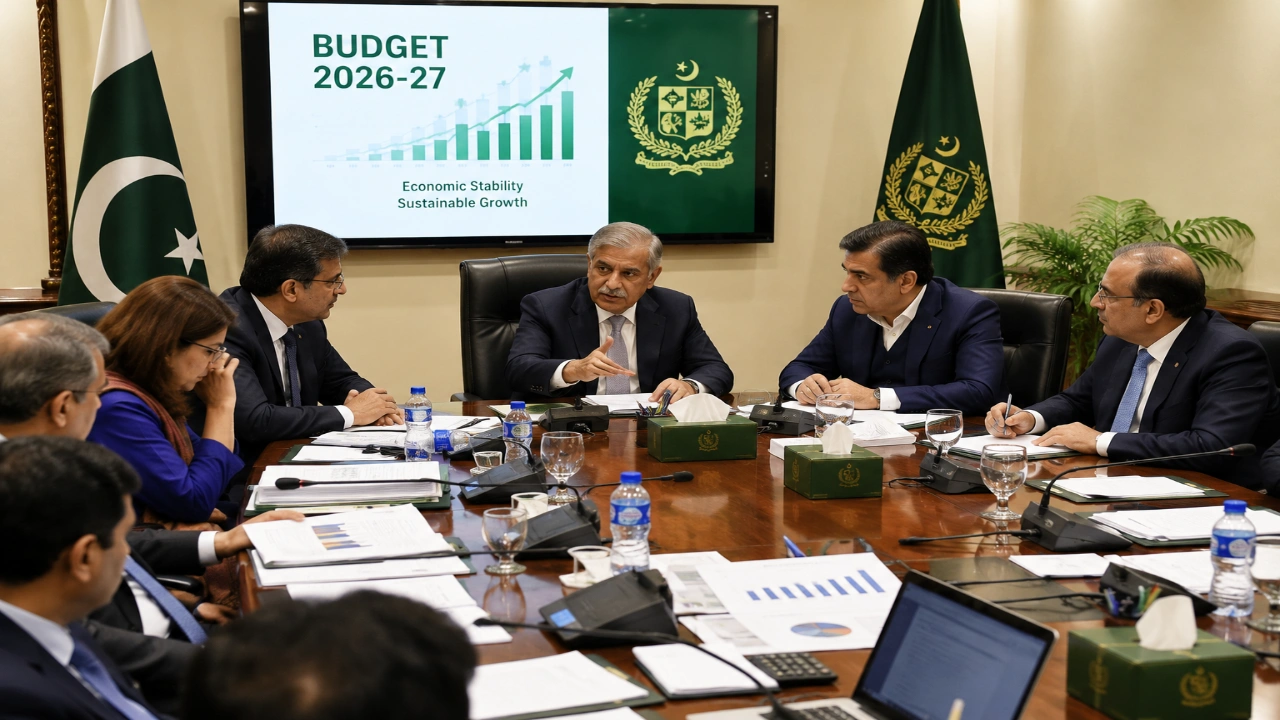
One of the biggest developments ahead of the budget announcement was the agreement between the federal government and major provinces regarding spending reductions.
According to reports, development expenditures and certain operational expenses are expected to be reduced as part of a broader strategy to manage fiscal pressures. Officials indicated that future fiscal requirements would be addressed jointly by the Centre and provinces while attempting to avoid imposing additional taxes where possible.
The agreement represents a significant breakthrough because disagreements over fiscal space had threatened to delay budget preparations. Provincial governments were concerned about maintaining their share of resources while the federal government sought additional room to address strategic and financial obligations.
PPP Support Strengthens Budget Prospects
Political stability often plays a crucial role in budget approval, and recent developments suggest the government has gained important support from coalition partners.
Following consultations between government officials and senior PPP leadership, both sides reportedly moved toward consensus regarding the timing and direction of the budget. The development reduces uncertainty surrounding parliamentary approval and improves the likelihood of smoother implementation of budget measures.
For investors and businesses, political cooperation is often viewed as a positive signal because it reduces the risk of policy disruptions during the fiscal year.
Development Spending Under Pressure
One of the major themes emerging from the budget 2026-27 is the challenge of maintaining development spending while controlling overall expenditures.
Reports indicate that fiscal constraints have forced policymakers to prioritize projects and reassess funding allocations. While development remains a priority, available fiscal space appears significantly tighter than in previous years.
Government planners must decide which infrastructure, education, healthcare, transportation, and regional development projects receive funding.
Areas Likely to Receive Priority
Infrastructure development
Energy sector improvements
Water resource management
Education projects
Healthcare facilities
Special area development programs
Budget documents indicate allocations for provinces, merged districts, Azad Jammu and Kashmir, and Gilgit-Baltistan remain part of the government's development agenda.
 Economic Growth Targets and Fiscal Discipline
The government is expected to continue emphasizing economic stabilization while pursuing moderate growth targets.
Recent economic reforms have focused on:
Increasing tax collection.
Expanding the tax base.
Improving documentation of the economy.
Enhancing digital financial systems.
Strengthening public finances.
Finance officials have repeatedly highlighted the importance of improving Pakistan's tax-to-GDP ratio and reducing reliance on borrowing for routine expenditures. These objectives are expected to remain central to the budget 2026-27 strategy.
What Businesses Want from Budget 2026-27
The business community has consistently called for:
Lower compliance burdens.
Simplified taxation.
Export incentives.
Stable economic policies.
Reduced cost of doing business.
Manufacturers, exporters, retailers, and technology companies are all closely monitoring budget proposals to assess how government decisions may affect investment and expansion plans.
Business groups argue that economic growth requires a predictable policy environment that encourages private-sector investment while maintaining fiscal responsibility.
What Salaried Individuals Are Watching
For ordinary Pakistanis, the biggest questions surrounding the budget 2026-27 include:
Will salaries increase?
Government employees are closely watching for salary adjustment announcements to offset inflationary pressures.
What about pensions?
Retired citizens are looking for pension revisions to help manage rising living costs.
Will taxes change?
Salaried workers remain concerned about income tax rates and exemptions.
Will utility costs rise?
Electricity, gas, and fuel prices continue to affect household budgets across the country.
Any relief measures announced in these areas could significantly influence public reaction to the budget.
Impact on Provinces
Provincial governments face the challenge of balancing development needs with fiscal constraints.
Punjab, Sindh, Khyber Pakhtunkhwa, and Balochistan all depend on resource allocations to fund essential services and infrastructure projects.
The agreement between the Centre and provinces regarding spending adjustments suggests a coordinated approach aimed at maintaining macroeconomic stability while preserving key development priorities.
IMF Influence on Budget 2026-27
Many economic observers believe IMF-linked fiscal discipline continues to influence budget planning.
Key priorities often associated with reform programs include:
Revenue enhancement.
Expenditure rationalization.
Debt management.
Public sector efficiency.
Economic sustainability.
While these measures can strengthen long-term economic stability, they often require difficult short-term decisions regarding spending and taxation.
Challenges Ahead
Even after budget approval, several challenges remain:
Inflation
Households continue to face higher costs of living.
Revenue Collection
Meeting ambitious revenue targets remains difficult.
Economic Growth
Balancing growth and fiscal discipline is never easy.
External Risks
Global economic uncertainty, energy prices, and geopolitical tensions can affect Pakistan's economic outlook.
These factors mean that the success of the budget 2026-27 will depend not only on policy announcements but also on implementation throughout the fiscal year.
Frequently Asked Questions
What is the budget 2026-27?
The budget 2026-27 is Pakistan's federal financial plan for the upcoming fiscal year, outlining government revenue, expenditures, taxation, development spending, and economic priorities.
Why are spending cuts being discussed?
The government and provinces are attempting to manage fiscal pressures and maintain economic stability while meeting financial commitments.
Has PPP supported the budget?
Recent consultations suggest PPP has moved closer to supporting the government's budget framework after discussions with senior leadership.
Will new taxes be introduced?
Final tax measures depend on the approved budget documents and parliamentary process.
How will budget 2026-27 affect ordinary citizens?
The budget could impact salaries, pensions, taxes, utility costs, development projects, and overall economic conditions.
Final Thoughts
The budget 2026-27 arrives at a critical moment for Pakistan's economy. With spending cuts, political negotiations, development priorities, and fiscal reforms all converging, this budget may shape the country's economic trajectory for years to come.
While challenges remain, the agreement between the federal government and provinces, combined with growing political consensus, provides a stronger foundation for implementation. For citizens, businesses, and investors alike, the coming months will reveal whether the budget succeeds in balancing economic stability with public relief.
One thing is certain: the decisions made under budget 2026-27 will influence everything from household expenses to national development priorities, making it one of the most important policy events of the year.
Also read:- Gold Prices In Pakistan

YouTube Automation 2026: Complete Guide to Start a Faceless Channel & Earn $500/Month
April 19, 2026
Best AI Tools for YouTube Automation in 2026: 7 Tools to Run Faceless Channels
April 20, 2026
YouTube Automation: How to Start a Faceless Channel with Free AI Tools
April 24, 2026![How to Earn Money on Fiverr: Beginner to First Order in 7 Days [2026]](https://ofolatolyxwxzujoblie.supabase.co/storage/v1/object/public/blog-media/dbbcujrtp6r.webp)
💬 Comments
No approved comments yet. Be the first to share your thoughts!
Leave a Comment
Your email address will not be published. Required fields are marked *